The People’s Peace Summit - It can be. It must be. It will be. Peace
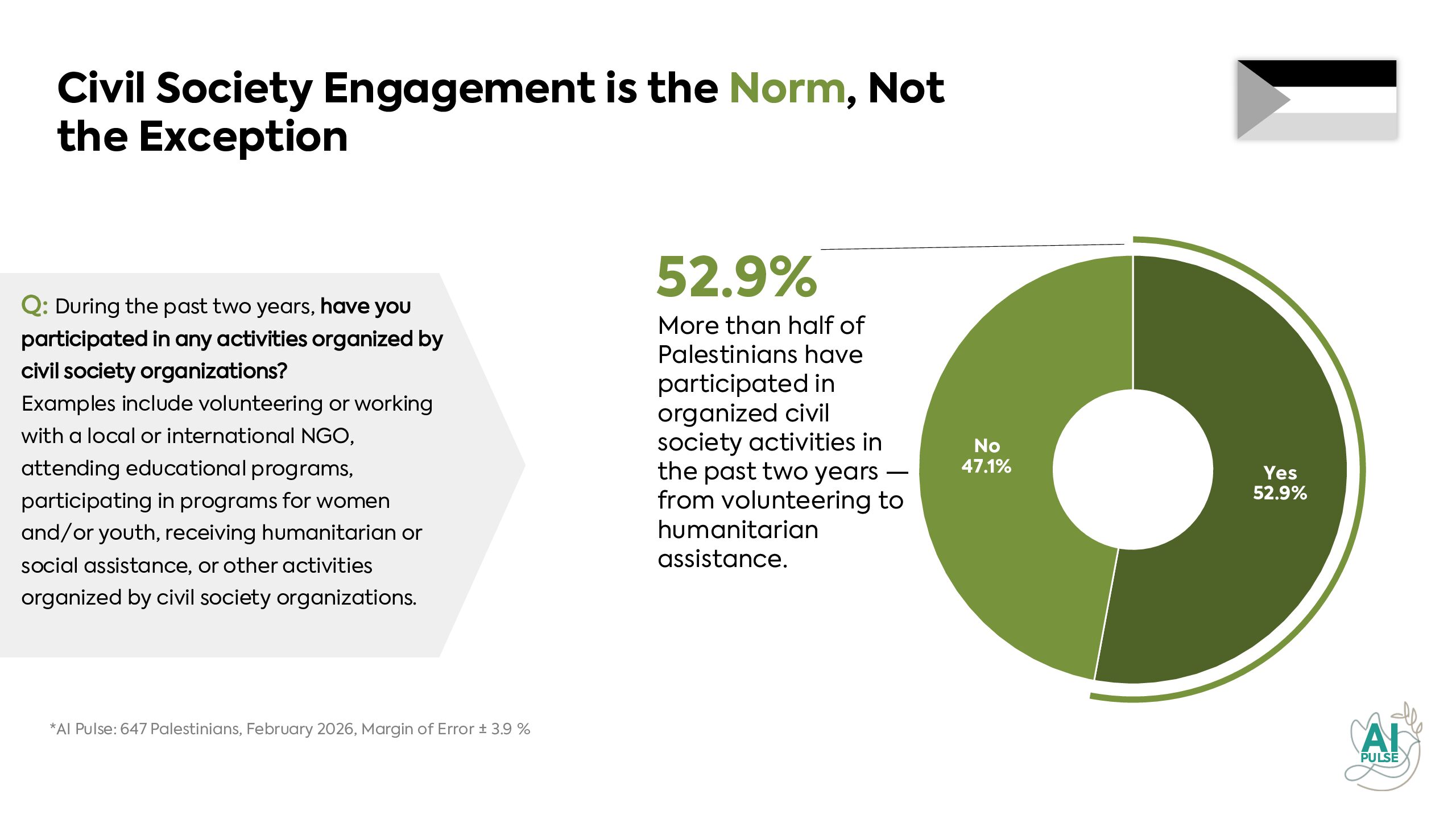
At the People’s Peace Summit 2026 in Tel Aviv, the Alliance for Middle East Peace (ALLMEP) together with It’s Time is presenting brand new polling from Israel-Palestine — focusing on civil society’s role in shaping the future of Palestinian-Israeli diplomacy and building momentum toward sustainable conflict resolution.
ALLMEP leads a growing network of over 200 civil society organizations, with hundreds of thousands of Palestinians and Israelis living and working in the region. Our work advances cooperation, trust, justice, equality, mutual understanding, and peace within and between these communities.
Internationally, we amplify the voices of Israeli and Palestinian peacebuilders, increasing their profile and raising support for their work and our shared agenda among policymakers. In Israel and Palestine, we raise the capacity and collective impact of our member organizations. Our mission is to secure self-determination for all and to build a sustainable peace in the region.
AI Pulse: Ripeness for Diplomacy and Readiness for Change






Policy Resources
- See the full slide-deck
- Recommendations from Israeli and Palestinian Civil Society for UN Working Groups on Advancing a Two-State Solution
- ALLMEP’s latest research: AI Pulse
- The International Fund for Israeli-Palestinian Peace
- How do we restore a diplomatic horizon? Institutionalize support for peacebuilding
- Is the peacebuilding field ready to scale? Yes.
- Lessons from a Conflict Solved (Northern Ireland Case Study)
- 2021 Youth Attitudes
- UK to Boost Peacebuilding Efforts for Israel Palestine
Bridging Policy and People: Civil Society at the Core of a Fused Multilateral Peace Framework
At ALLMEP, Palestinians and Israelis who have been at the forefront of efforts to end this war, welcome the ceasefires that have taken hold, albeit fragile, as a critical milestone. We now must turn to the essential task of building the foundations that will ensure this never happens again.
It is why we are deeply encouraged to see that civil society’s vision and expertise was formally incorporated into the New York Declaration, with the support of 142 countries.
Similarly, Point 18 of the 20-Point Peace Plan articulates a bold strategy to promote narratives and cultures of peace, stating:
“An interfaith dialogue process will be established based on the values of tolerance and peaceful co-existence to try and change mindsets and narratives of Palestinians and Israelis by emphasizing the benefits that can be derived from peace.”
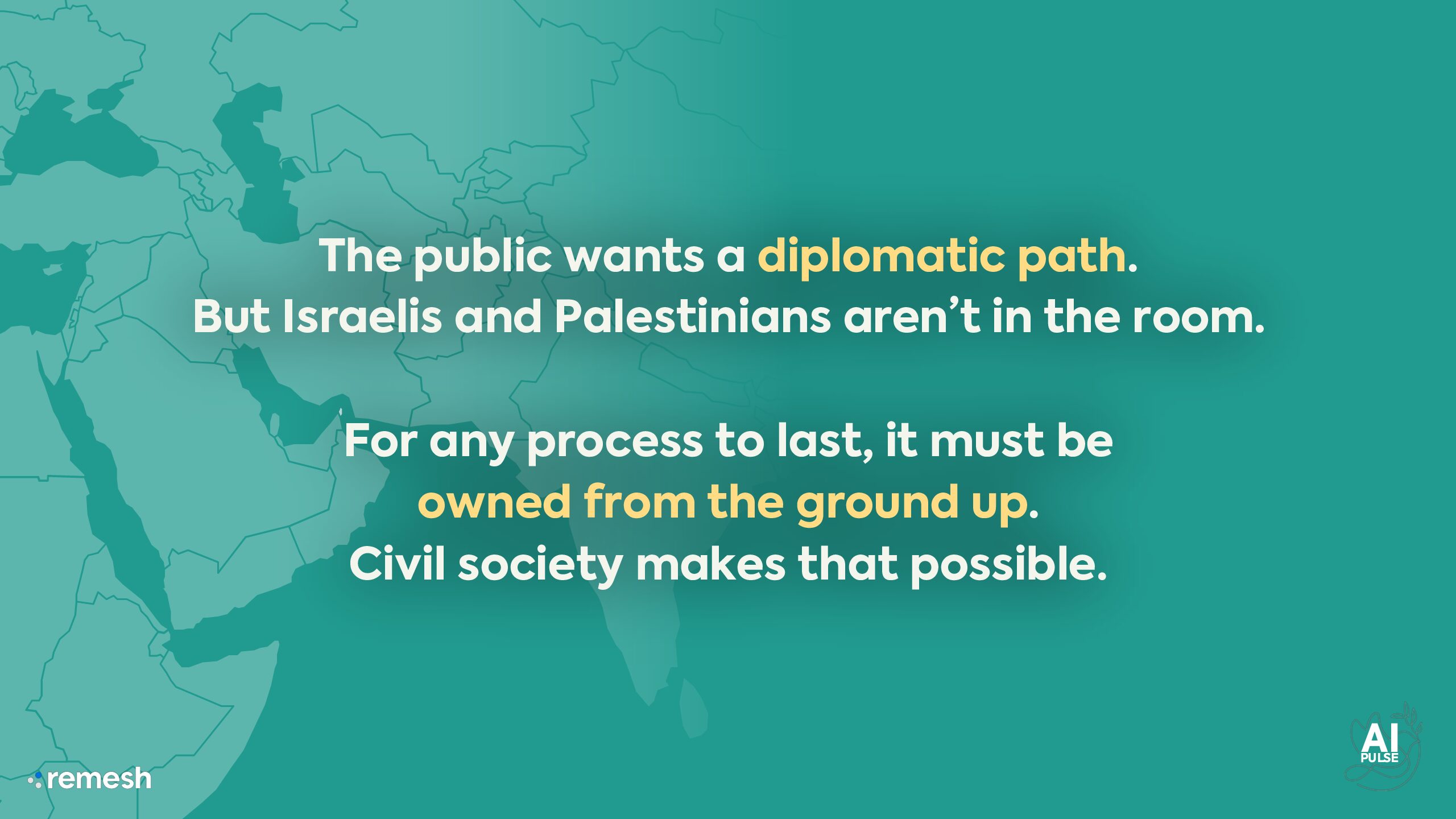
Both diplomatic frameworks reflect an understanding too often missing from previous peace efforts: that this intergenerational conflict involves two deeply traumatized communities, and that no diplomatic process can succeed without engaging directly with the citizens who must be its primary stakeholders. Without addressing that trauma — and investing in processes of rehabilitation and reconciliation — no political agreement can endure. Above all, lasting peace will need trust and public support.
Momentum for such initiatives is already strong across Europe and the US. The 2020 Middle East Partnership for Peace Act (MEPPA), passed with bipartisan support, marked the first major U.S. investment in people-to-people peacebuilding between Israelis and Palestinians. The 2024 G7 Leaders’ Communiqué pledged to institutionalize international coordination for such efforts. Later that year, Prime Minister Keir Starmer endorsed the creation of an International Fund and announced plans for the Foreign Secretary to convene an inaugural meeting in London.
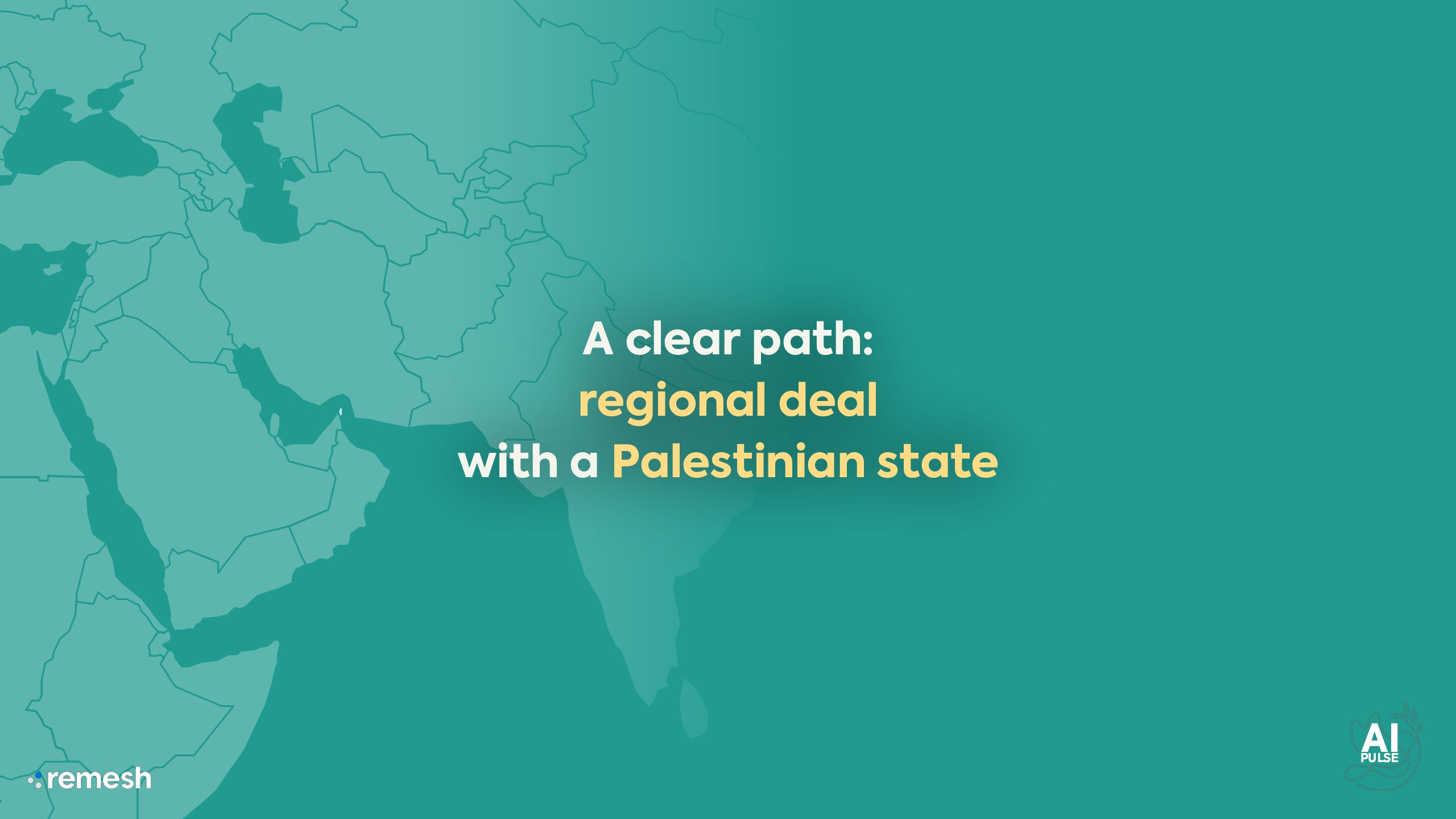
In May 2025, the European Union reinforced its support with an €18 million Foreign Policy Instruments package announced by HR/VP Kaja Kallas at the Peoples’ Peace Summit in Jerusalem. In June, President Macron convened civil society at the Paris Call for Peace, generating a broad set of policy recommendations to advance Israeli-Palestinian peace from the ground up. Many of those policy recommendations were included in the New York Declaration, which was adopted by the same Arab and European countries that have also joined in support of the U.S.-led plan.
UK Foreign Secretary Yvvette Cooper has taken the next step, by committing to host a peacebuilding conference in London to help establish an International Peace Fund for Israel and Palestine on March 12 – ALLMEP’s core advocacy demand – and a crucial step towards fulfilling the G7 commitment. The conference was put on hold following the war with Iran, but the momentum continues. An International Fund offers the necessary vehicle for the international community to jointly deliver on long-term peace. It provides a unique institution capable of turning diplomatic strategy into action, and of scaling the work on the ground necessary to secure the conditions for diplomatic solutions to be successful and durable.
As implementation of the 20-Point Peace Plan is underway, MEPPA remains funded, and the International Fund For Israeli-Palestinian Peace is in reach, there is a clear and timely opening to scale the bottom-up work that lays the foundation for mutual trust and a sustainable peace. The next months are crucial to fulfill the 2024 G7 policy pledge to deepen engagement with civil society in pursuit of long-term conflict resolution.
Hundreds of organisations already working on the ground are ready to scale their impact. With targeted investment and coordination, they can turn this plan into action and deliver visible progress toward peace.