

EU Council Conclusions recognise civil society’s role in Israeli-Palestinian peace – and what comes next under Ireland’s presidency.
A week after the 12 June conference, civil society marked another historic milestone: the EU Council conclusions published on 19 June recognise for the first time the fundamental role of civil society in shaping the future of Israel-Palestine.
This is not EU boilerplate language, nor a routine diplomatic formulation. This recognition is the direct result of integrating grassroots voices right where they belong – at the centre of the policy conversation.
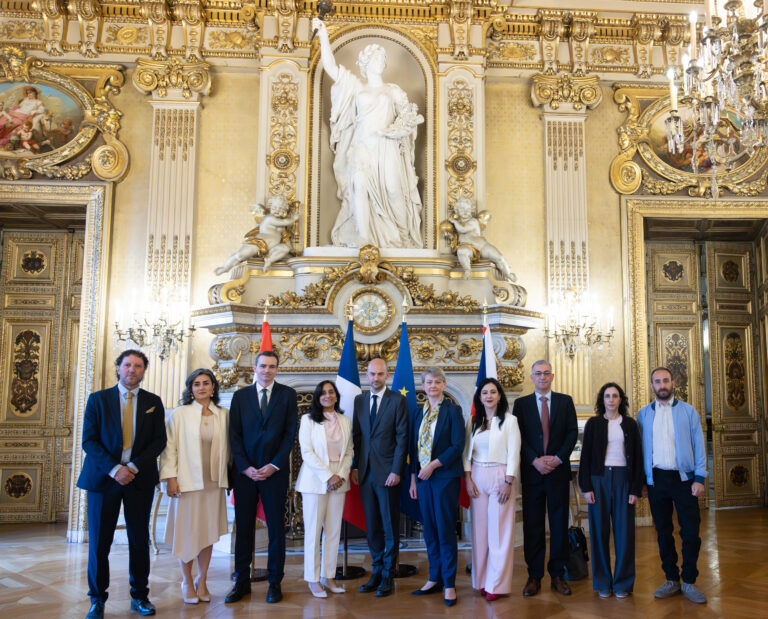
On June 12, EU leaders gathered in Paris with Palestinian and Israeli peacebuilders to listen to the firsthand experiences and priorities of those working every day to build foundations for a lasting peace. It was a historic moment of direct engagement between high-level diplomacy and grassroots expertise – one that left a formal mark on the EU’s diplomatic record.

At the conference, EU High Representative for Foreign Affairs Kaja Kallas said it clearly: “Civil society is not an afterthought in diplomacy, it is indispensable for building peace”.
One week later, the Council went beyond reiterating its “commitment to a comprehensive, just and lasting peace”; it explicitly recognised “the important role played by civil society in peacebuilding efforts and in building the foundations necessary for a negotiated and lasting Israeli-Palestinian peace”.
We highly appreciate the leadership of European Council President António Costa, HR/VP Kaja Kallas, and President Nikos Christodoulides in championing this crucial recognition during Cyprus’s Council presidency, alongside the support of EU Member States that helped secure this milestone.
Acknowledgment matters, but it is only the beginning: it must be backed by structural, institutional integration. Translating this historic recognition into long-term impact requires the EU Council to go further and institutionalise civil society’s role as a core, permanent pillar of EU diplomatic strategy on Israeli-Palestinian peace.
As Ireland assumes the Presidency of the EU Council, a salient parallel emerges with Ireland’s own history of conflict and its resolution. The Good Friday Agreement would not have been possible or durable without decades of structural grassroots peacebuilding work and the institutional architecture that supported it financially and politically, including the International Fund for Ireland. That lived understanding of what peacebuilding requires is needed as ever, making Ireland a natural champion for integrating civil society and institutionalising its role as a core feature of the EU foreign policy playbook.
We look forward to working closely with Taoiseach Micheál Martin and the Irish Department of Foreign Affairs to build on the momentum that June has brought, and turn formal recognition into lasting institutional change.